I’ve been reading Gare Joyce’s “Future Greats and Heartbreaks”, a book about a journalist learning the art of scouting, and there have been a number of neat tidbits about the 2006 and 2007 NHL drafts and the junior hockey that was being played at that time. But there was one story that I didn’t find as much neat as I did sad. There’s no secret that there’s a race problem in hockey. It’s no longer hard racism so much as it is soft. White Canadian coaches prefer compliant, dull, white Canadian players, and so when a guy like P.K. Subban – with a lively personality and something of an ego – comes along, it sticks out like a sore thumb, and words like “enigmatic”, “selfish”, “undisciplined”, and “cocky” get thrown around.
As Joyce travels around the Canadian Hockey League venues, he encounters a draft-eligible prospect by the name of Akim Aliu. As a hockey fan, I remember Aliu as somebody who was drafted in the second round by the Chicago Blackhawks, who briefly played for the Calgary, and just recently played a season with the Hamilton Bulldogs. But it turns out there was a lot more there I had missed.
 Jack Han, formerly of the Montreal Canadiens, now of Habs EOTP, wrote an
 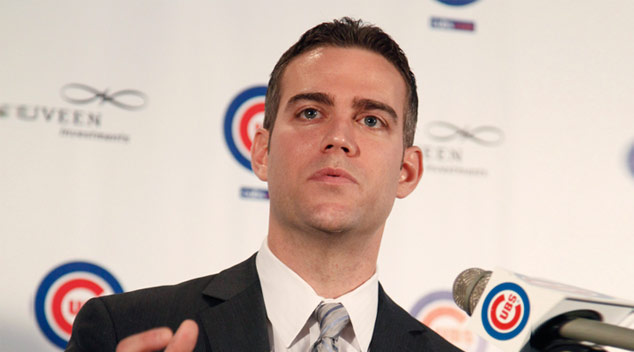 There’s a scene in Moneyball where Red Sox owner John Henry offers his vacant GM position to Billy Beane. “Anybody who’s not tearing their team down right now and rebuilding it using your model,” he says. “They’re dinosaurs.” The Oakland A’s were the first movers of modern sports analytics. They took a risk, and while there were stumbles along the way, they benefitted as a result. In hockey, it took a decade longer for any kind of true analytic implementation, and we’re still not quite in “tear down and rebuild using your model” territory. So why has it taken so long? I think the answer lies in the hockey world’s view of baseball. NHL executives are drawn to the differences between the two sports rather than their similarities. Yes, baseball is a stop-start game whereas hockey is fluid. And yes, baseball involves more one-on-one matchups and less team play. But beyond that, the games – and the strategies that result in building the best possible teams – are actually quite similar.
 In June of 2010 I joined Twitter, and I had no idea at that point what an impact it would have on my ability to analyze and process the game of hockey. In the four years since, I’ve read thousands of articles, and was fortunate to be welcomed into Habs Eyes On The Prize, able to share my writing, research, and analysis with its loyal and diverse readership. Don’t worry, I’m not stepping down from anything, and I hope to continue to contribute analytical Habs-related content to EOTP, but I decided near the end of last season that I wanted to start my own blog, giving myself ultimate editorial freedom and the ability to jump from team-to-team, sport-to-sport, topic-to-topic and serve what I hope will become a readership of my own. Now that we are nearing the beginning of another NHL season, I thought it was the right time to act on that decision.
 AP Hockey